As a mainstream high-end fine-pitch display solution, COB technology has completely broken the performance bottlenecks of traditional SMD screens in high-definition indoor display scenarios. Many customers often confuse COB and SMD technologies and are unclear about their applicable scenarios and maintenance methods.
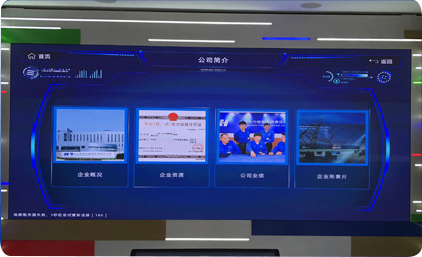
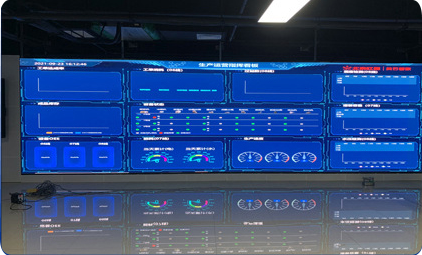
This article will start with the core characteristics of COB technology, systematically compare the essential differences between JERYO COB product and SMD LED displays, and share professional, standardized COB screen repair processes and key precautions, helping global users correctly select products and achieve efficient daily maintenance.
1. Core Structural & Characteristic Differences: COB product vs SMD
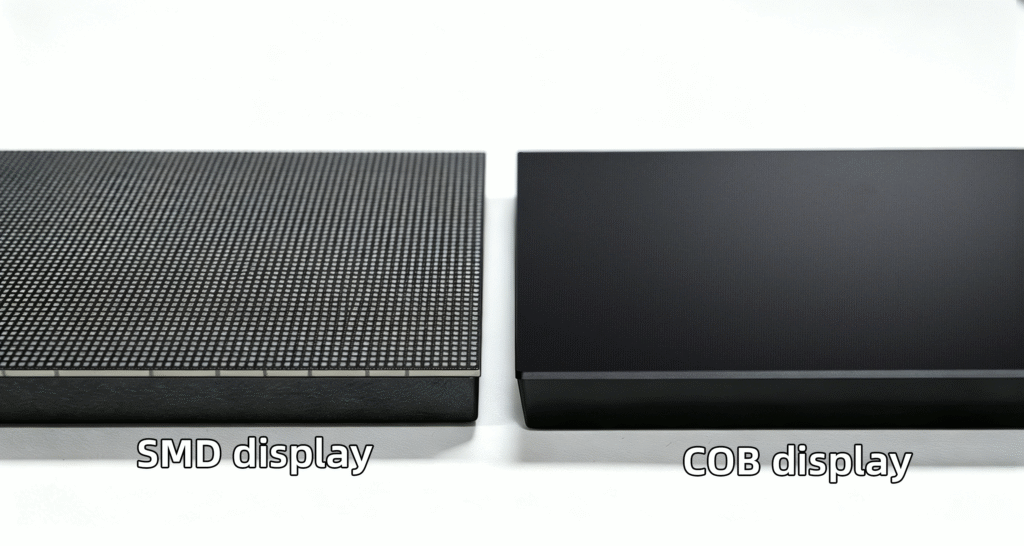
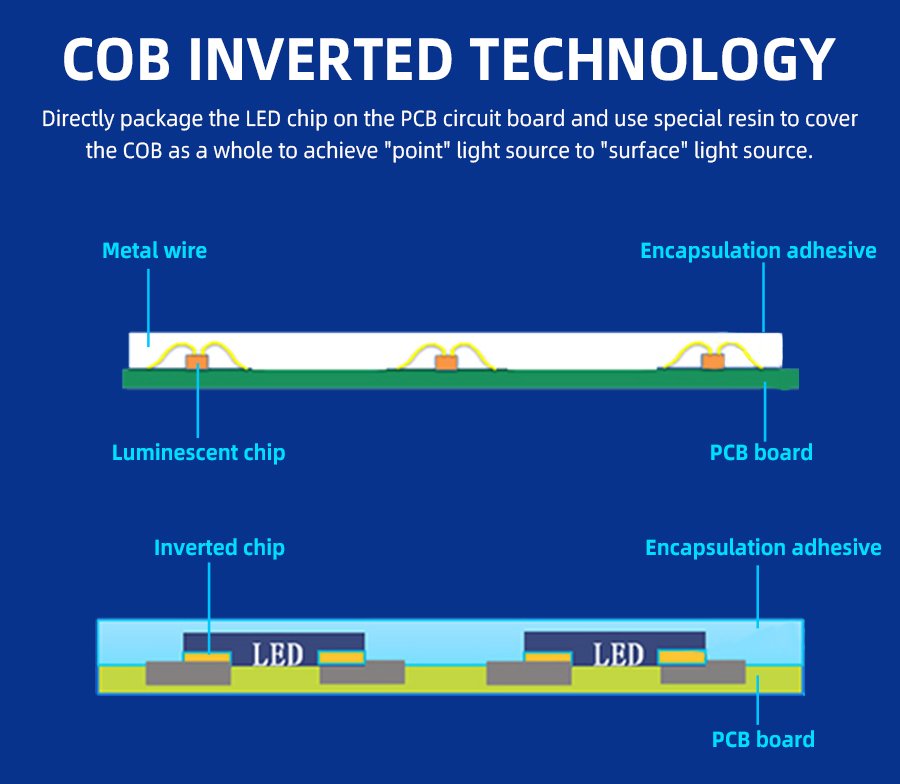
The fundamental gap between COB and SMD displays lies in the chip packaging and mounting process, which directly determines their performance, durability and maintenance logic. JERYO COB product adopts advanced Chip on Board packaging technology, which is completely different from the traditional Surface Mounted Device process of SMD screens.
1.1 Packaging Process Difference
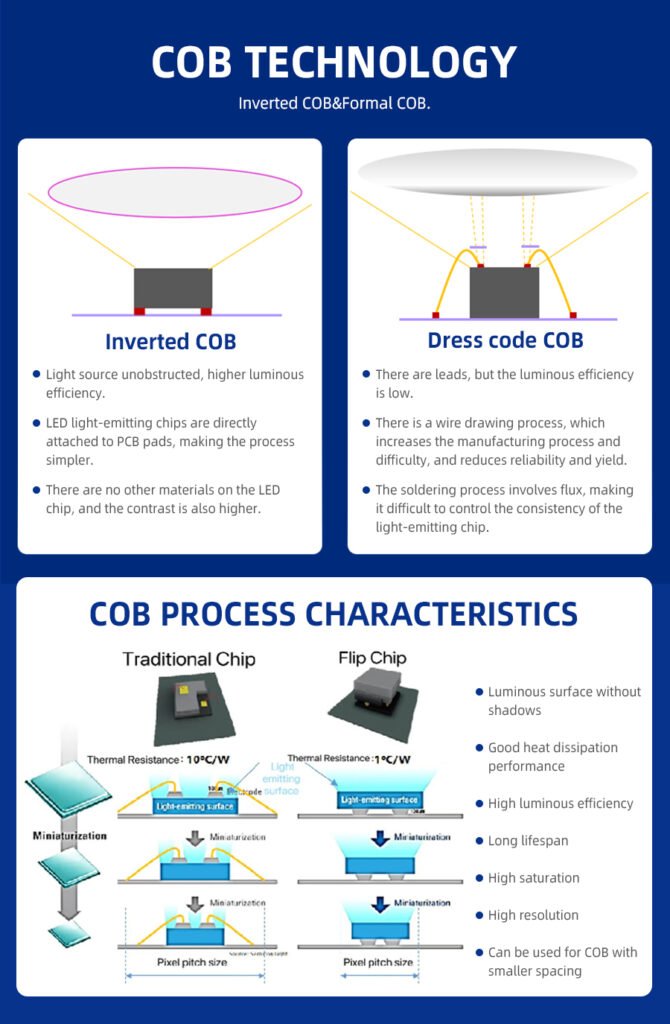
Traditional SMD LED displays adopt independent lamp bead packaging. Each LED chip is packaged into a single lamp bead with pins, then welded and pasted on the PCB board. The surface is exposed with gaps between lamp beads, relying on external coating for simple protection.
JERYO COB product cancels the independent lamp bead structure. It directly adheres the bare LED chip to the PCB substrate through microscopic copper pillars, and covers the entire screen surface with a continuous integrated epoxy resin encapsulation layer. There are no bonding wires or exposed lamp beads, forming a seamless integrated light source surface, which is the core reason for its superior performance than SMD screens.
1.2 Visual Display Performance Difference
In fine-pitch display scenarios (especially P0.78 ultra-fine pitch), the performance gap between the two products is fully amplified. SMD screens are limited by independent lamp bead structure, and the pixel gap is obvious. When displaying high-definition pictures and text, the granular sense is strong, and moiré patterns are easy to appear when shooting with cameras, which cannot meet high-end video conferencing and studio shooting needs.
JERYO COB product realizes a completely seamless display surface. The ultra-black resin substrate improves screen contrast significantly, effectively eliminating graininess and glare. It supports ultra-high-definition image restoration, presents more delicate and uniform colors, and has no moiré during camera shooting, perfectly adapting high-end scenarios such as command centers, corporate exhibition halls and high-standard video conferences.
1.3 Durability & Environmental Adaptability Difference
SMD exposed lamp beads have poor environmental adaptability. The gaps between lamp beads easily absorb dust, moisture and oil stains. The welding pins are prone to oxidation and virtual welding, resulting in dead pixels and flash screens. The overall protection level is low, and the annual failure rate is about 2%-3%, which is not suitable for long-term uninterrupted operation.
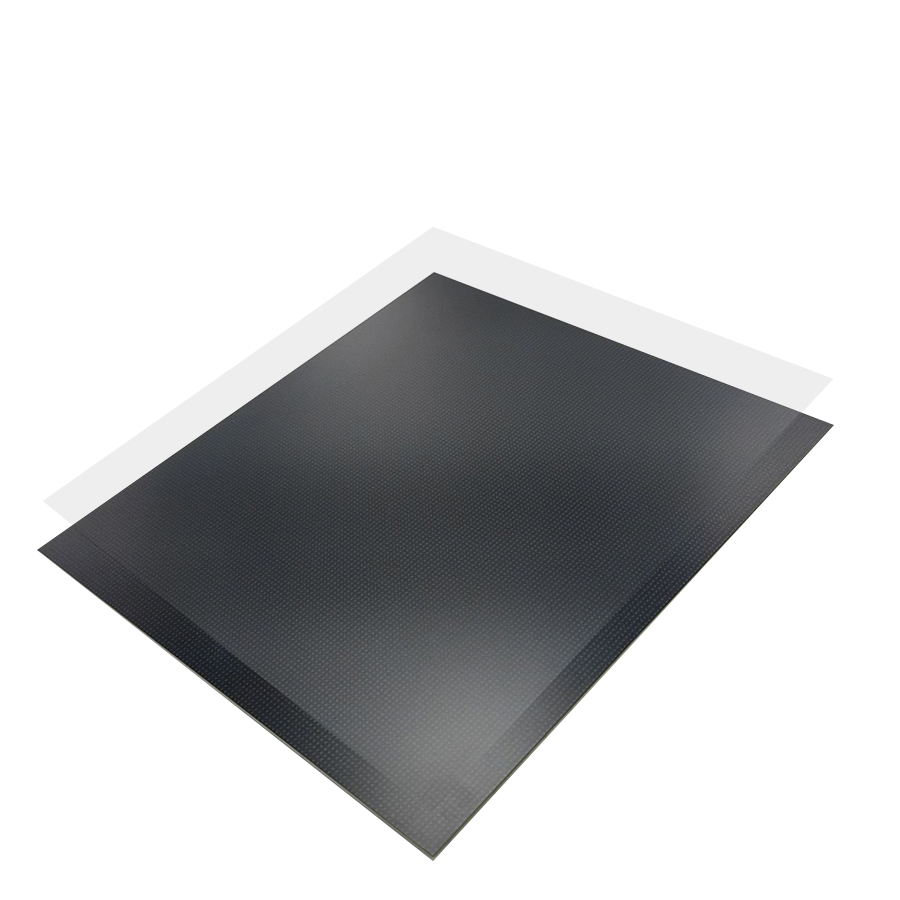
JERYO COB product has an integrated fully encapsulated structure with an inherent IP54 protection level without extra coating. The overall resin layer completely isolates moisture and dust, cuts off the ion migration path, and avoids chip oxidation and short circuit. In terms of heat dissipation, the integrated substrate heat conduction structure is more efficient, which can stably control the working temperature below 75℃, effectively reducing light decay and pixel failure rate, and the annual failure rate is as low as 0.5%, supporting 24/7 long-term stable operation.
1.4 Application Scenario Differentiation
SMD products feature mature technology, low cost and convenient single lamp bead maintenance. They are mostly used in conventional indoor and outdoor display scenarios such as ordinary advertising screens, stage rental screens and community display screens, focusing on cost performance and flexible on-site maintenance.
JERYO COB product, with its ultra-high definition, high durability and zero-glare characteristics, is positioned in high-end fine-pitch display scenarios, including smart command centers, high-end office video conferencing, museum exhibitions, luxury retail display and other scenarios with strict requirements for display effect and equipment stability.
2. Key Maintenance & Repair Differences Between COB and SMD Screens
Due to structural differences, the maintenance modes, operation difficulty and cost of COB and SMD displays are completely different. Many users misunderstand that COB screens are difficult to repair. In fact, standardized professional maintenance can efficiently solve most faults, while avoiding secondary damage caused by incorrect operation.
2.1 SMD Screen Maintenance Characteristics
SMD adopts independent detachable lamp bead design with low maintenance threshold. For single dead pixels and faulty lamp beads, technicians can use a hot air gun to disassemble and replace individual lamp beads on site within a few minutes. The operation is simple, the maintenance speed is fast, and the single maintenance cost is low, which is very suitable for rental scenarios and frequent on-site debugging scenarios.
However, the disadvantage is that SMD screens have high failure frequency. Long-term use will cause continuous oxidation and damage of lamp beads, requiring frequent spot inspection and replacement, and the later maintenance workload is large.
2.2 JERYO COB product Professional Repair Guide
The integrated fully encapsulated structure of COB screens cannot adopt the single lamp bead replacement mode of SMD screens, and ordinary hot air gun disassembly will damage the overall encapsulation layer and adjacent chips. The repair threshold is higher, and professional equipment and standardized processes are required. The following is the official standardized repair process of JERYO COB product:
Step 1: Fault Diagnosis & Positioning
First, perform full-screen brightness and pixel detection through professional detection software to confirm the fault type (single pixel failure, local module failure, screen body flash, no display, etc.) and accurately locate the faulty module area. Distinguish chip damage, circuit failure or external power supply and signal failure to avoid blind disassembly.
Step 2: Professional Disassembly & Cleaning
For local faulty modules, use professional laser repair equipment to strip the local resin encapsulation layer accurately without damaging the surrounding normal chips and circuits. Clean the dust and residual colloid of the faulty position to ensure a flat and clean repair base surface.
Step 3: Precision Replacement & Welding
Aim at the damaged pixels or chips, use professional precision welding equipment to replace the bare chip, and conduct micro-welding through copper pillar bonding technology to ensure stable circuit connection and no virtual welding or missing welding.
Step 4: Encapsulation Restoration & Debugging
After the replacement is completed, perform local resin encapsulation repair to restore the integrated seamless protective structure of the screen surface. After the colloid is completely cured, conduct full-screen brightness calibration, color calibration and pixel detection to ensure that the display effect of the repaired area is consistent with the whole screen, with no color difference or brightness difference.
Step 5: Overall Inspection & Delivery
Carry out 24-hour continuous power-on aging test on the repaired screen body to confirm no repeated faults, and complete the final waterproof and dustproof performance inspection to ensure the stability of the repaired equipment.
2.3 COB Screen Daily Maintenance Precautions
Compared with SMD screens, JERYO COB product has extremely low daily failure rate, and daily maintenance is more focused on protection rather than frequent repair. Users only need to keep the installation environment dry and dust-free, avoid sharp object scratching the screen surface, and regularly check the power supply and signal lines. It does not need frequent lamp bead replacement, and the long-term comprehensive maintenance cost is lower than that of SMD screens.
3. Summary: How to Choose COB productroduct or SMD Display?
In short, SMD displays are suitable for cost-sensitive, conventional display scenarios with flexible on-site quick repair needs. JERYO COB product ultra-fine pitch display relies on seamless integrated structure, high protection, low failure rate and ultra-high-definition display effect, becoming the preferred solution for high-end fine-pitch indoor display projects.
Although COB repair requires professional technology and equipment, its ultra-low annual failure rate greatly reduces the frequency of later maintenance. For high-end commercial display scenarios that pursue stability, display effect and long-term service life, JERYO COB product has obvious comprehensive advantages over traditional SMD products.
FAQ
Q1: Is COB productproduct screen harder to repair than SMD? A: COB repair requires professional laser equipment and technical operation, with higher single repair threshold, but its failure rate is far lower than SMD. The overall maintenance pressure and cost in the whole life cycle are lower.
Q2: Can faulty pixels of JERYO COB product be repaired on site? A: Minor single pixel faults can be repaired on site by professional JERYO after-sales engineers with dedicated equipment; severe module damage can be solved by standardized module replacement.
Q3: Which scenario is more suitable for SMD display? A: SMD is more suitable for outdoor advertising, stage rental, ordinary indoor display and other scenarios with low requirements for display fineness and high demand for rapid on-site maintenance.